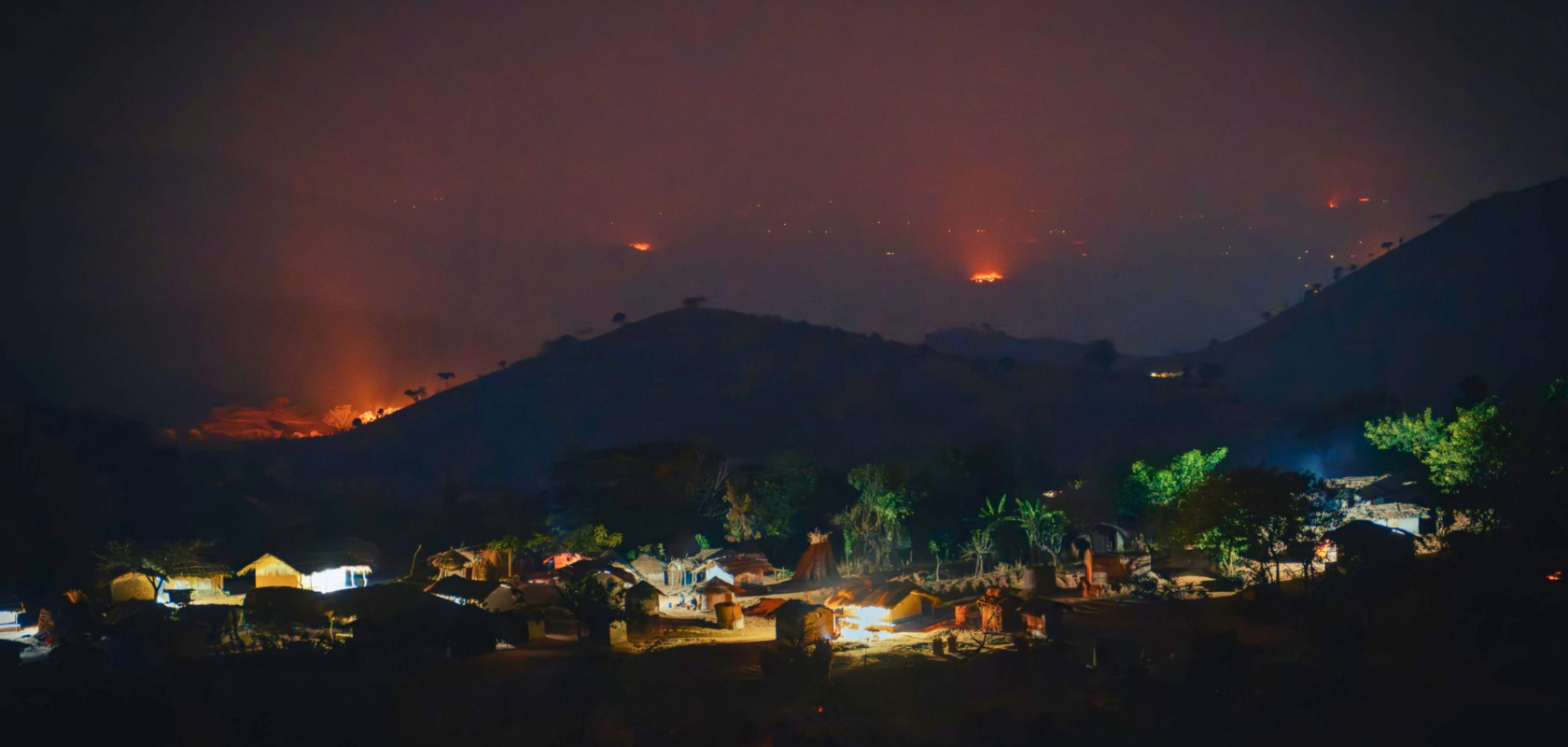
It’s 5.30pm in rural Malawi and Zambia, and the sun is already setting. Within minutes, the landscape is transformed. Cicadas begin to trill as homes, farms and communities are plunged into darkness. For people without electricity, tools are put down, market stalls packed away and children forced to close their schoolbooks until morning.
Today, 600 million people across sub-Saharan Africa still live without electricity. For many rural communities, sunset means the end of the working day, the chance to learn or the opportunity to earn a living.
But it doesn’t have to be this way.
From improved education to resilient livelihoods, we meet three people whose lives have been transformed by solar energy.
Starting Tuesday 1 December for one week, you can help bring those possibilities to even more people. Through our Big Give Christmas Challenge, every donation to our appeal will be doubled.
Donate today to double your impact.
A region transformed by light

Evaristo Mhone, wearing a blue repair technician jacket, sits at a disk repairing a solar product. Photo: SolarAid/ Kondwani Jere.
In the SunnyMoney Repair and Energy Access Hub in Kasakula, Malawi, Evaristo Mhone sits calmly at his desk, surrounded by a colourful array of tools. He speaks steadily about a time not long ago when nightfall meant risk.
For many families here, a candle or a bundle of burning straw was the only way to light a home. “Sometimes [people] would burn their houses because that’s fire, you know,” Evaristo says. “Their houses are grass thatched, so that would cause their houses to burn.”
Kasakula is a remote, rural region of Malawi, home to around 44,000 people. Until last year, households relied on polluting kerosene lamps, expensive batteries, or burning grass and straw to see after dark. Each option carried a cost, whether to health, to finances, or to safety.
That changed when SolarAid’s community-led Light a Village project connected all 8,813 households in Kasakula to solar energy for the first time.
Today, Evaristo sees the difference everywhere he looks. Solar lights glow in homes across the region, and the risks that once came with the dark have fallen away. “Now [the community] can light all night long without encountering any danger,” he says. “They have school pupils, students, who can study as they want, just because there is light.”
For Evaristo, being part of this change is a source of deep pride. A childhood fascination with wires, motors and how things work has grown into a career repairing solar products and supporting his community.
“I am happy because we have managed to reach a lot of souls and we have helped a lot,” he says. “And we will continue helping them since they will continue using the products.”
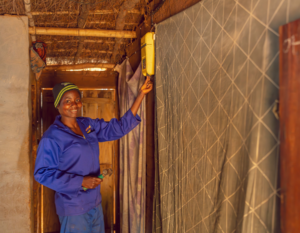
Ethel Bottomani, wearing blue overalls, installs a solar home system in Kasakula, Malawi. Photo: SolarAid/ Kondwani Jere.
Among those customers is Ethel Bottomani, a farmer and tailor who has since become a Customer Service Representative with SunnyMoney’s Light a Village initiative, helping other households access solar lighting.
Before solar, Ethel’s tailoring income was unpredictable, limited by the short hours of daylight. Now she can keep sewing after dark, earning more to support her family. And her children have more time to study.
“Even at night I am able to do tailoring, so I generate income with help of the light,” she says. “It helps the children, because they study at night… they perform very well, indeed.”
Building resilience through solar
We meet Timothy Ruzani on his farm in Katalilo Village, Zambia, on a cloudy day with the promise of rain. Cowbells sound in the distance. Dragonflies drift lazily through the air, drawn to the nearby Chongwe River. A man of few words, Timothy has spent 15 years caring for this fertile stretch of land, growing green peppers, tomatoes and maize.
Last year, he and his family were connected to solar energy for the first time through SunnyMoney Zambia’s Energy-as-a-Service pilot. After years of relying on expensive batteries, the change was immediate.
“My first night ever using a solar light… it was an awesome experience,” he says. “I was able to see clearly at night and felt safe. This area has a lot of snakes and scorpions, so the biggest challenge is not being able to look out for those.”
The light has impacted his children’s education too. “Now with this home system, [my children] can study in the comfort of their room,” Timothy says. “This has really helped them do well in their studies.”
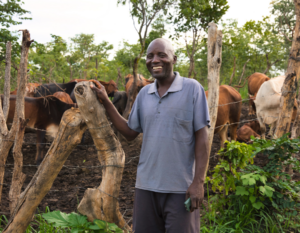
Timothy Ruzani farms an area of land close to the Chongwe River in Malawi. Photo: SolarAid/ Kondwani Jere.
But as a farmer, Timothy knows how fragile a livelihood can be when it depends on the weather.
“The drought that happened last year, 2024. In the entire 15 years I have lived here, it was my first time to see the Chongwe River dry up.”
It is a risk many smallholder farmers now face as rainfall becomes increasingly unpredictable.
Solar energy offers a way to adapt.
Through our Productive Use model in Malawi, we have seen first-hand how solar-powered irrigation supports farmers to grow food more reliably, protect their livelihoods and build resilience against the effects of climate change. For farmers like Timothy, it could mean keeping crops alive through the dry season and securing a steadier source of food and income.
Help us spread the gift of light
From Ethel’s growing tailoring business and Evaristo’s hard work keeping solar products in use, to Timothy’s safer and more resilient farming, their stories show what access to energy can make possible.
But there are still millions of people waiting for that opportunity.
This Christmas, you can help change that. Donate to SolarAid’s Big Give Christmas Challenge this week and your donation will be doubled.
Together, we can reach more communities, support locally led solutions and bring the gift of light to those who need it most.