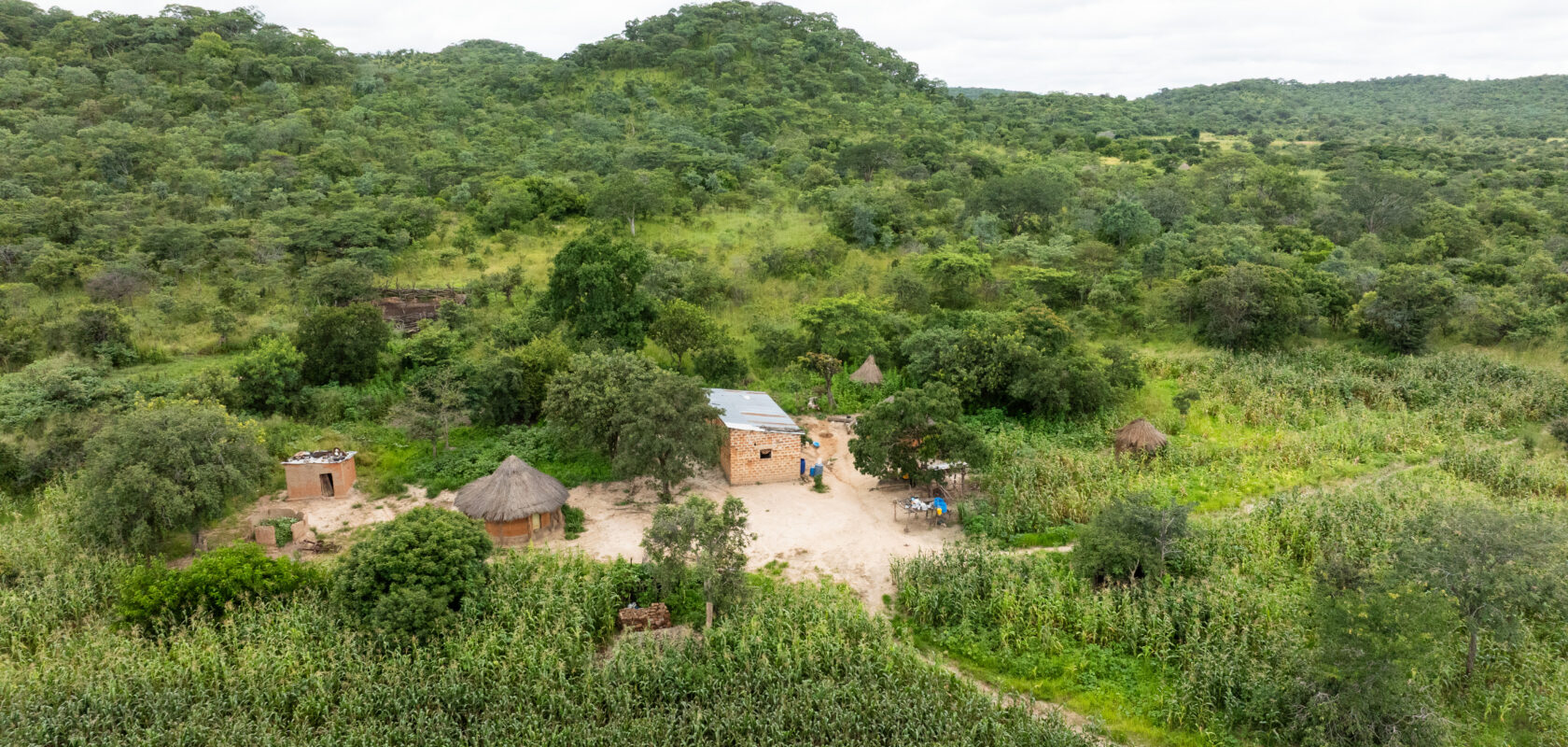
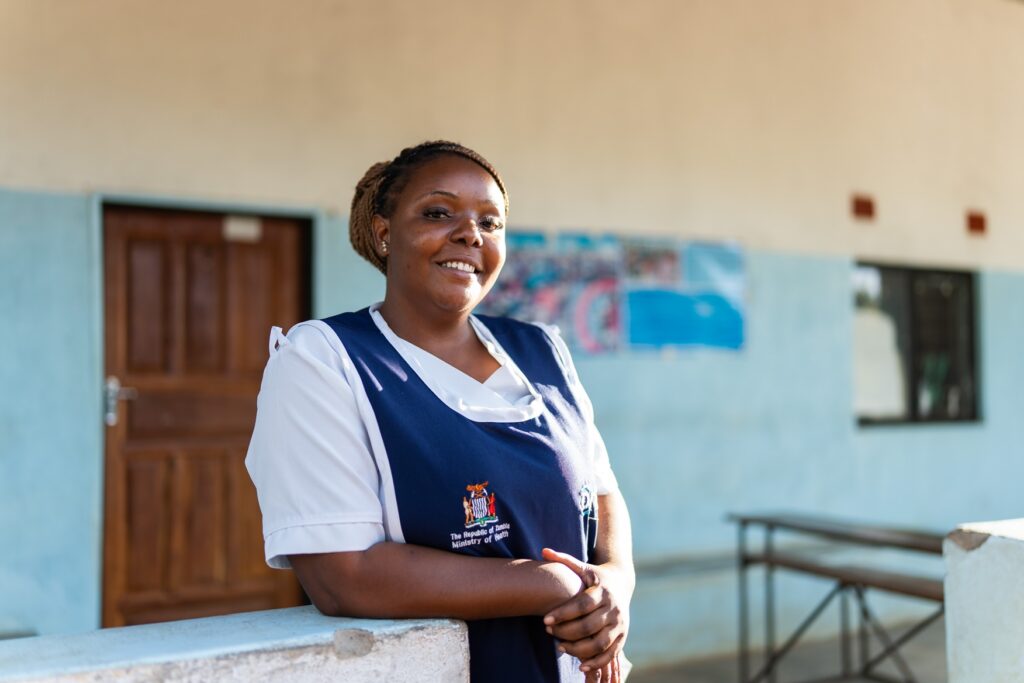
Cleopatra Maambo, a nurse at Ndubulula Health Post, outside the facility in Kantyatya Village, Namanongo. Cleopatra has worked in healthcare for eight years and hopes reliable electricity could help improve care for patients across the community. Photo: SolarAid/Jason J Mulikita
At Ndubulula Health post in Kantyatya Village, Namanongo, Zambia, we meet Cleopatra Maambo, a calm and softly spoken 32-year-old nurse, wife, and mother of two. Cleopatra has worked as a health worker for the past eight years, fulfilling a dream she has carried since childhood.
“I’ve always wanted to do nursing. Actually, it’s a family thing; my grandmother was a nurse, my aunties… It’s just a family thing. So I’ve always had that passion to do nursing since childhood. I used to see my grandmother as my role model.”
For Cleopatra, nursing is far more than a profession. It is a responsibility built on trust and care.
“What I like most about being a nurse is that it’s not like a job, it’s more like you’re playing a significant role in people’s lives. People believe in what you’re doing. So, you tell them what to do, you give them information and they put their trust in you.”
Her dedication has also inspired her own family.
“My twelve-year-old, she looks up to me as her role model”, Cleopatra says with a laugh. “Because whenever she comes, when I’m with her, she sees me attending to patients, so she’s got that picture of ‘I also want to be like mom.’”
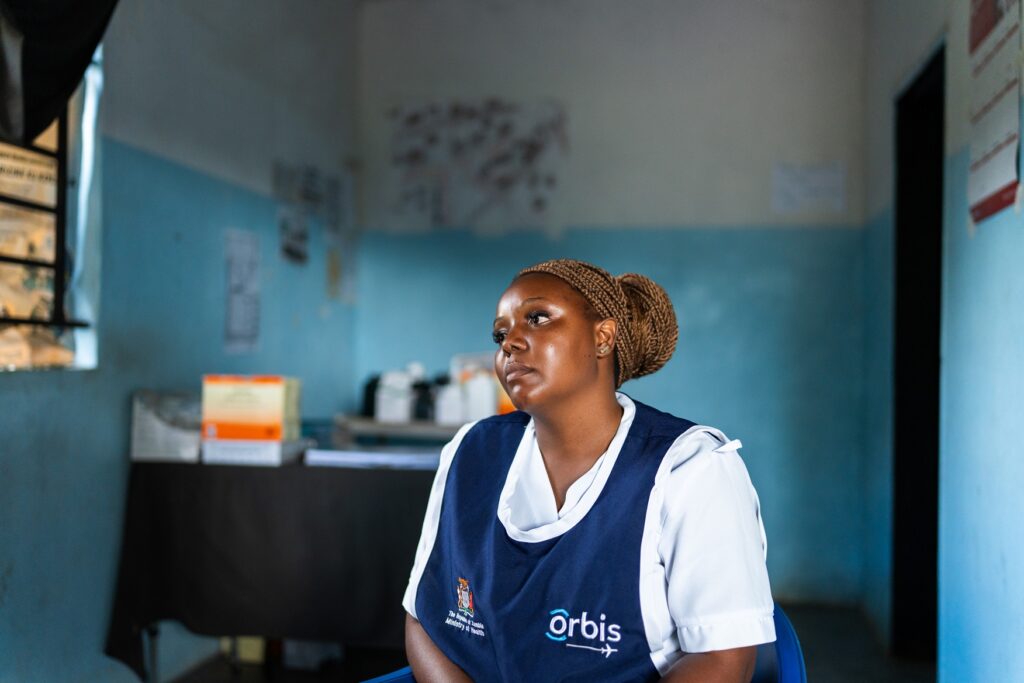
Cleopatra Maambo inside Ndubulula Health Post in Kantyatya Village, Namanongo. Cleopatra shared how the lack of reliable electricity affects healthcare workers and patients, particularly during night-time emergencies. Photo: SolarAid/Jason J Mulikita
Although Cleopatra has solar lighting at home, the clinic itself remains without reliable electricity. She works from morning until 4pm, but is also called back to handle emergencies during the night – a reality she describes as one of the greatest challenges of her work.
“The facility doesn’t have power; so, you’ll find that when you face an emergency, you come here and you start using your phone to light. That way, it’s very difficult to even observe a patient for a long time. So in the end, we just refer to the next facility for observation.”
At night, the lack of electricity transforms even basic care into a frightening experience.
“During the night, when we receive emergencies, this place becomes dark. You’re not even sure where you’re stepping. Just the process of you coming from your place to reach the facility, it’s even scary, because you don’t even know where you’re stepping.
And also, when you reach the facility, anything can happen, because it’s dark. You’re not even sure who is there. We become uncomfortable because we’re scared for our lives, because when you reach the facility, it’s dark, and then you’re there, you don’t even know the people you have to attend to, and you’re losing the touch to manage them. So, it’s risky.”
The absence of power also means the clinic cannot offer maternity deliveries – something Cleopatra finds deeply painful.
“People have to travel to a very far facility to get those services, which they can easily get from the nearest one, which is this one. This one doesn’t have power, so we cannot conduct deliveries.”
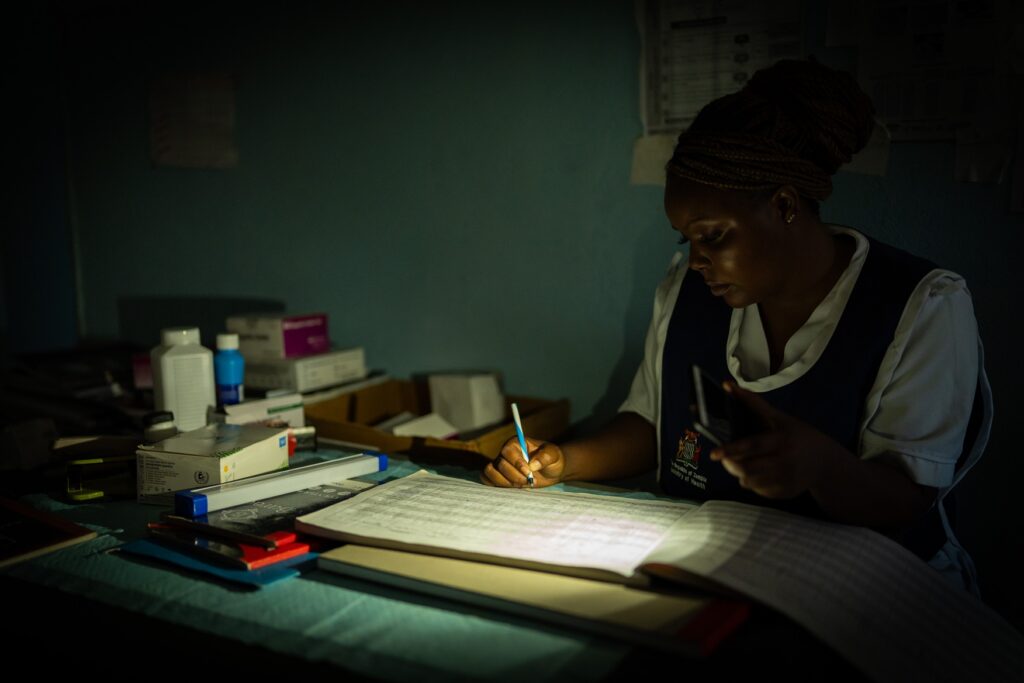
Cleopatra Maambo uses a torch and mobile phone for light while completing paperwork at Ndubulula Health Post. Without reliable electricity, health workers often rely on personal devices to respond to emergencies after dark. Photo: SolarAid/Jason J Mulikita
A few solar panels sit on the clinic roof, but they are reserved solely for powering the vaccine refrigerator. For additional light, health workers rely on battery-powered torches or their own mobile phones.
“We also encourage the community when they come to be attended to during the night, we advise them to come with something to use for lighting, because we might not have something to use, so we encourage them to come with it.”
The clinic regularly handles serious emergencies, many of them seasonal.
“The most common illnesses or emergencies we face, especially during the night… it’s seasonal; So in this season, we’re experiencing a lot of high malaria incidences. Then there are snakebites.”
Cleopatra recalls one particularly tragic case involving a woman injured in a fire caused by candlelight.
“This person had gone somewhere and when she came back during the night, she had to light a candle. So she dosed off, upon dosing off, the fire broke out and she got burned. Unfortunately, we lost her.”
The loss still affects her deeply.
“If I hear such stories as a healthcare worker, I feel bad. Everything changes, the mood… because the community is more like my family and there are my people. And I know the number of households and everything, so if one dies, if such a thing happens, it’s more of a loss, I’ve have lost something, more like I’ve lost one of my children.”
Reflecting on the potential for the clinic to receive solar power through SolarAid’s Energy-as-a-Service programme, Cleopatra speaks with hope about what reliable electricity could mean for both healthcare workers and the wider community.
“It would be a great thing, because even my work would be very easy. And also, on the part of the community, it would even reduce some expenses, because you’ll find that we refer them to the other facility, which is far from here, and when they reach there, they go with relatives. And then those relatives, they have to look for food in another environment, which they are not used to. So it’s very difficult.
So if such a thing was to happen, both us as health workers and the community would benefit. It would be very easy for us to attend to patients, and even the patients, it would be very easy for them because they will have access to the services at any time.”