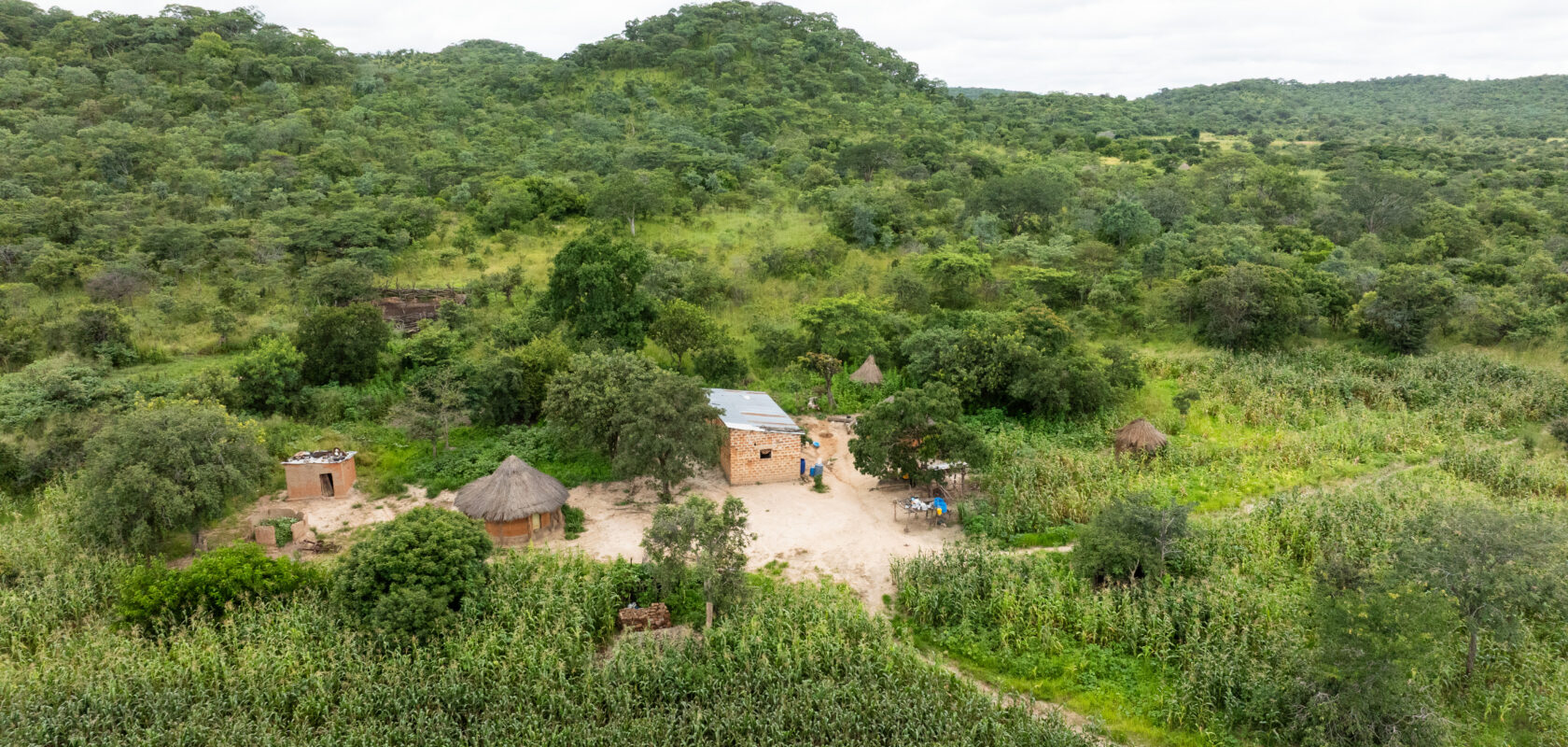

Fridah Luputa Mwale stands outside her home in Chipungu village, Zambia. Fridah hopes reliable solar lighting will help keep her family safe after dark and create new opportunities for the future. Photo: SolarAid/Jason J Mulikita
Mrs. Fridah Mwale, 52, is a farmer living with her husband and five of her children in Chipungu village, Zambia. Outgoing and warm, Fridah is eager to share her story.
Chipungu is peaceful and quiet – a place where Fridah and her family have chosen to build their home. But when the sun sets around 6pm, the atmosphere changes completely.
“When it gets dark, it just doesn’t look nice. When it gets dark and you are walking, you may start imagining or thinking there’s something coming in front of you just because it gets pitch-black.The journey to my home without reliable lighting gets sad and scary.”
Without reliable lighting, the Mwale family tries to finish dinner before sunset.
“This is because we don’t always have money to buy those batteries to put in a torchlight” says Fridah. “There are several challenges that bother me; sometimes, it’s difficult to attend to a sick person at home at night.”
Fridah also worries deeply about her mother, who was born with a disability that makes it difficult for her to stand on her right leg.
“If we had access to reliable light after dark, I’m sure it would make her life much easier and safer. If something were to crawl into the house at night, she would be able to see it clearly and alert someone nearby. In the dark, however, she cannot see anything and is left vulnerable. I believe it is far better for her to have clear visibility at night, rather than being unable to see or protect herself when it matters most.”
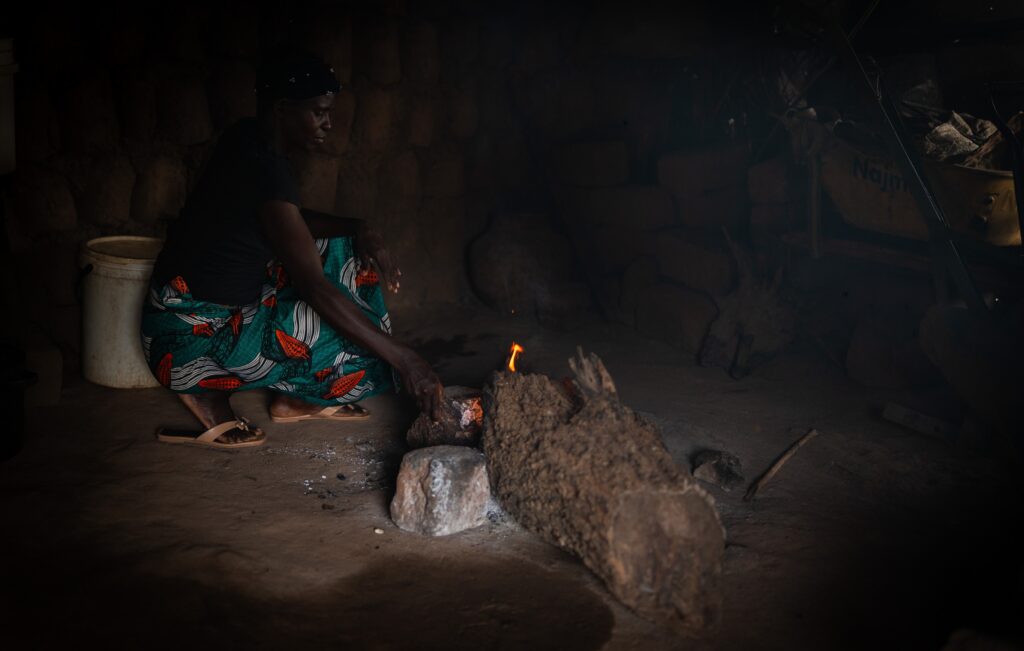
Fridah Luputa Mwale prepares a fire inside her home after dark. Without reliable lighting, daily activities and caring for family members can become difficult and unsafe at night. Chipungu village, Zambia. Photo: SolarAid/Jason J Mulikita
As a child, Fridah dreamed of becoming a police officer – a dream inspired by the officers she saw every day growing up.
“When I was a child, I really wanted to become a policeman. This was at heart; I was really looking forward to wearing that police uniform. I was inspired by the policemen and women who worked near our home. Our house was close to a police station, so I was constantly exposed to their daily activities and the work they were doing in the community.”
Today, she sees similar ambitions in her son Emmanuel, who lives in Lusaka, Zambia’s capital city. But she knows how difficult it can be for children in rural communities to pursue their education without proper lighting.
“For school children, studying at night can be a real challenge without reliable lighting. In some cases, a child can be forced to go to a neighbour’s house or somewhere else with better light just to complete their homework or study. As a parent, this brings additional worries. If something unfortunate happens or the child is exposed to negative influences while away from home.”
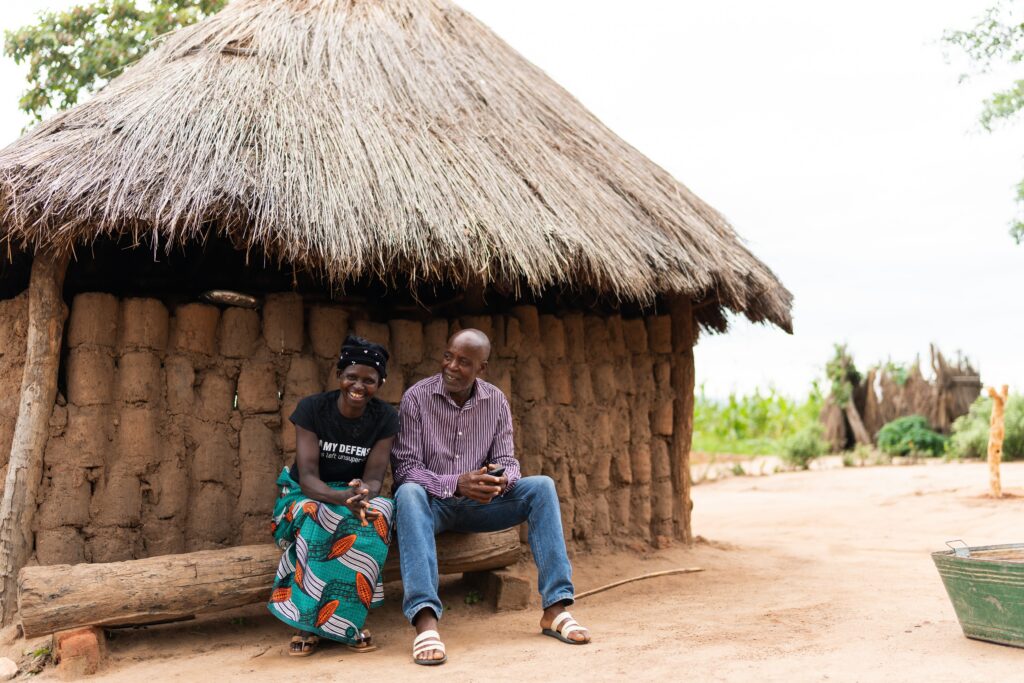
Fridah Luputa Mwale and her husband sit outside their home in Chipungu village, Zambia. Fridah believes reliable solar power could help create new opportunities for her family and support plans for a future business. Photo: SolarAid/Jason J Mulikita
For many families, relying on unsafe sources of lighting also brings significant dangers. Fridah remembers a devastating fire from her own childhood that changed her understanding of those risks forever.
“After we moved back from Ndola, we were living at the farm. One day, my young sister took a burning straw into the house. Unfortunately, the curtain caught fire and the flames quickly spread, setting the entire house alight. I ran inside before the fire intensified and managed to pull out only two blankets. Everything else; the beds, mattresses, and even our maize stocks were burnt to ashes. That fire continued burning for nearly two months. People began donating food to help us, and a government official later provided blankets and mattresses. Thankfully, both my parents who were disabled at the time were outside when the fire started. Had they been inside the house that day, they would have died in the inferno but by God’s grace, they weren’t in the house, we were all seated outside at the time. That experience made it painfully clear to me how dangerous and devastating the lack of safe, reliable lighting can be.”
Now, through SolarAid’s Energy as a Service pilot in the area, Fridah is beginning to imagine a different future – one with new opportunities for both her family and herself.
“For me, having access to electricity or a solar home system that supports productive use would completely transform my salon business which I have in mind. I would be able to grow and work more efficiently. It would make me very happy because life would begin to look far more promising. What currently feels distant and almost impossible would suddenly feel within reach.”
Fridah’s family is one of hundreds of families in Namanongo who could benefit from reliable solar power. Find out how SolarAid is working towards 100% energy access in the community, and how you can help make it possible.
Stories like Samuel’s are unfolding across rural Zambia. Sign up to our newsletter, or follow SolarAid on LinkedIn or Instagram to stay connected to the people and communities at the heart of this work.