“When we have light, we will live with a free mind in our homes because it will be bright enough to see and do any work after dark.”
“I would be happy because these school going children would be able to study at night and if a snake were to enter the house, we would be able to see it and avoid harm”

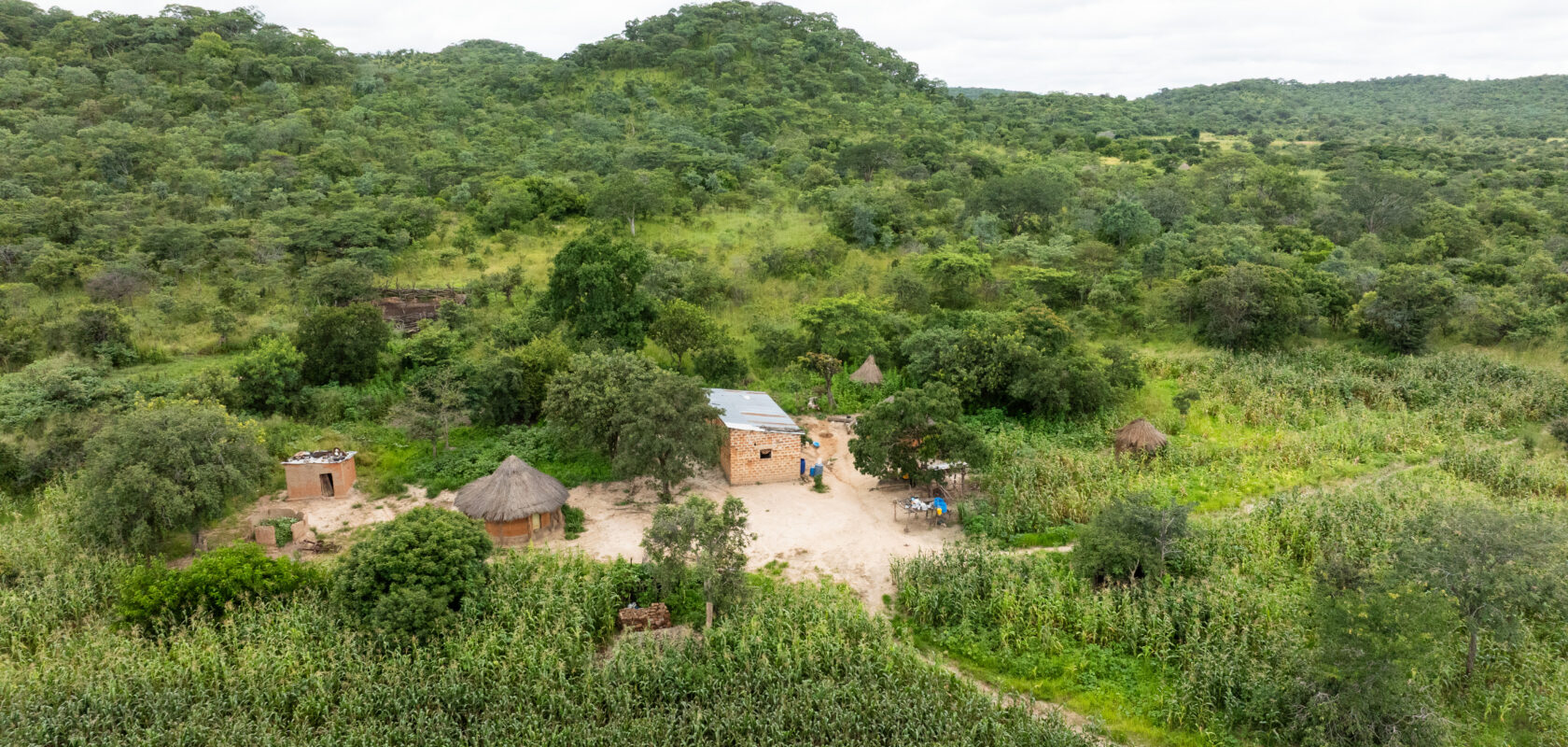
Samuel Chanshika stands outside his home in Kantyatya village, Namanongo, Zambia. Samuel lives with his wife Lilian and their extended family and hopes reliable solar lighting will help his grandchildren study after dark. Photo: SolarAid/Jason J Mulikita
67-year-old Samuel Chanshika lives with his wife Lilian in a serene area surrounded by maize fields in Kantyatya village in Namanongo, Zambia. Lilian and Samuel live with their four grandchildren and three adult children, who all have their own homes on the compound.
He is a smiley and humorous man who says he enjoys the area he lives in because it is peaceful and quiet. He grows maize, groundnuts and beans, and keeps livestock such as chickens, goats and cattle.
But at night, the serene area changes.
“The challenges are there. You know, this place is like in the bush; there are several things like wild animals that may be roaming around in the night. So there is need to have some form of lighting to be able to see those and what may be happening outside. Secondly, we have school going children, and there’s need for them to be able to study at night after school – but they just go to bed when it’s dark until the next day when the sun is out.”
To be able to see at night, Samuel and Lilian either use a battery-powered torch or candles, but both come with dangers. Samuel has already experienced two house fires caused by candles tipping over near small children.
“The house caught fire and everything in the house got burnt.”
Using a battery-powered torch is also expensive, as the family needs to buy new batteries every two days. Often, there is simply not enough money, leaving Samuel and Lilian in darkness.
“Right now, the battery for the torch light has lost power and we don’t have money to replace or buy a new battery at the moment.”
Samuel’s wife Lilian adds:
“When the torch light is out and the battery is dead, I make use of what I learnt from my grandmother; I get those used rubber flip-flops and cut them into long pieces and later light them up one at a time, which works just like a candle. It lights up well and at the least, enables me to see at night.”

Lilian Chanshika holds a homemade light source made from strips of old rubber flip-flops, which she uses when torch batteries run out and there is no other source of light available. Kantyatya village, Namanongo, Zambia. Photo: SolarAid/Jason J Mulikita
Samuel and Lilian live in an area where SolarAid aims to pilot its Energy-as-a-Service programme and install solar home systems in 450 households initially.
Samuel says:
“We would gladly receive them. When we have light, we will live with a free mind in our homes because it will be bright enough to see and do any work after dark. I would be happy because these school going children would be able to study at night and if a snake were to enter the house, we would be able to see it and avoid harm.”
Lilian adds:
“My life would change significantly if I had access to reliable lighting. With dependable light, I could even start keeping chickens or run a small poultry business. However, without reliable lighting, that’s almost impossible. When you have reliable lighting, your main concern becomes buying feed, not worrying about visibility or safety. The lack of access to lighting has greatly limited our productivity.”
Samuel, who did not have the opportunity to attend school as a child, tells us about his grandchildren’s dreams.
“The girl usually tells me that she wants to be a nurse and envies working in a health facility. One of the boys says he wants to be a policeman and the other says he wants to be a teacher after school.”
“In our time, we didn’t have schools like nowadays. So the dream for me was to become a farmer just like I am right now,” he says with a smile.
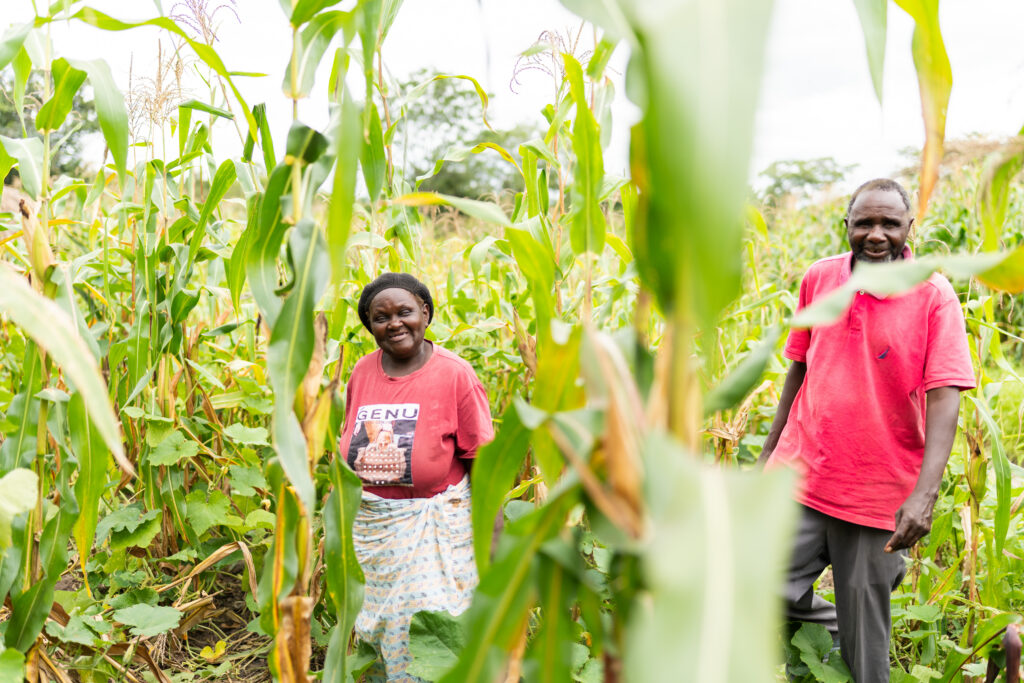
Lilian and Samuel Chanshika stand among their maize crops near their home in Kantyatya village, Namanongo, Zambia. The couple rely on farming to support their family and have experienced increasing challenges from changing rainfall patterns. Photo: SolarAid/Jason J Mulikita
Relying on the land is not always easy for Samuel.
“From the time I came here 1993, the rainfall pattern has been changing. Some years it would rain heavily and some nothing at all. So for the past few years we’ve experienced drought, we survive through selling some goats and then we would buy some maize elsewhere.”
“Lately, we’ve had people that come to teach and sensitize us, the community on climate change and climate resilient farming. So even when we have drought, we would still harvest a little just for consumption.”
“They would usually teach on rain harvesting; where we dig some holes to keep some water to use whenever there is drought. It’s through such initiatives, that when we plant, we are able to harvest something.”
As Samuel reflects on the years that have passed, we ask him the secret to a long and healthy life. He says it is about living in harmony and working closely together with friends, the community and community leadership.
Samuel’s family is one of hundreds of families in Namanongo who could benefit from reliable solar power. Find out how SolarAid is working towards 100% energy access in the community, and how you can help make it possible.
Stories like Samuel’s are unfolding across rural Zambia. Sign up to our newsletter, or follow SolarAid on LinkedIn or Instagram to stay connected to the people and communities at the heart of this work.